This article was first published on Green Air Online on 11 July 2017 Wed 12 July 2017 – Yesterday, the European Parliament’s environment committee (ENVI) voted on how the aviation sector should be treated under the EU’s Emissions Trading System (EU ETS), in response to a decision by the International Civil Aviation Organization (ICAO) to set …
Read more “Now is the time to upgrade Europe’s aviation pollution rules”
11 Jul 2017 BRUSSELS 11 July 2017. Today, the European Parliament’s environment committee voted to include international flights in Europe’s carbon market from 2021 onwards. Lawmakers also took small steps towards making the aviation industry pay more for its massive climate impact. The committee was voting on aviation’s future role under the EU’s Emissions Trading …
Read more “EU lawmakers improve Europe’s aviation pollution rules”
This article was first published on Euractiv on 27 June 2017 Amid calls from heavy industry to get more free pollution permits in the name of a ‘fair’ EU carbon market, Europe’s workers, taxpayers, and the climate must not be forgotten in the system’s design reform, writes Femke de Jong. Today, the representatives of EU …
Read more “A fair EU carbon market: but for whom?”
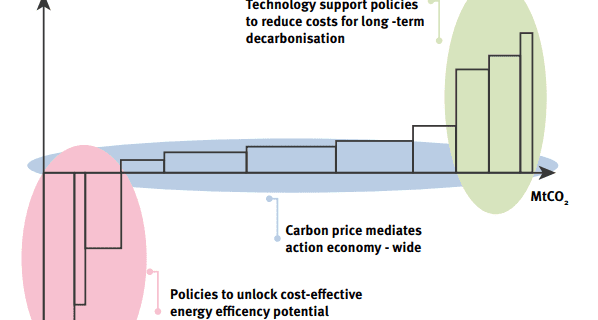
Executive Summary Around the world, governments are establishing carbon pricing systems to put a price-tag on greenhouse gas emissions and incentivize more climate friendly practices. The EU launched its own Emissions Trading System (EU ETS) in 2005. While the ETS is a necessary instrument to decarbonise the power and industry sectors in Europe, experience shows …
Read more “A Clean Fit: The role of the EU ETS in the energy policy landscape”
The Institute for European Studies at the Vrije Universiteit Brussel, in cooperation with Carbon Market Watch, is delighted to host an interactive academic debate on European Climate Policy.
In February 2017, the European Commission presented a legislative proposal regarding coverage of aviation emissions by the EU’s Emissions Trading System (EU ETS). In response to the offsetting agreement reached in the International Civil Aviation Organisation (ICAO) in October of 2016, the Commission proposes to cover only intra-European flights with the EU ETS and to exclude flights entering and leaving Europe.
Last week the European Parliament adopted its position on the revision of the EU’s Emission Trading System (EU ETS) for the 2021-2030 period. Next week, EU environment ministers will try to reach an agreement on the reform deal. Time to take a fresh look at what is on the table, and what is at stake.
Last week, the European Parliament adopted its position on the revision of the EU Emissions Trading System (EU ETS). While overall the position falls short of a true reform, the EU lawmakers did decide to include shipping in the EU ETS in the absence of climate action at the global level, and strengthened the rules for the aviation sector.
The European Commission last week finalized a decision to reduce the amount of free pollution permits handed out to energy intensive industry for the period up to 2020. This decision comes at a time when the European Parliament and EU ministers are deliberating over how many pollution permits heavy industry should get for free after 2020.