Dear Members of the European Parliament’s Development Committee, We, the undersigned, representing 60 networks and organizations from 23 countries, call on you to adopt an ambitious opinion on the revision of the European Union Emission Trading System (EU ETS), that will reflect the importance of taking into account the perspective of most vulnerable countries to …
Read more “Open letter to Members of the Development Committee of the European Parliament on the revision of the EU ETS”
10 May 2016, 10.00-16.45 (CET), Mundo B, Fair Trade Room, Brussels AGENDA 9.30-10.00: Arrival, coffee & tea 10.00 -13.00: Session 1: Experience with low-carbon funding in the EU Moderator: Femke De Jong, Carbon Market Watch Introduction: Towards quality and accountable climate finance Urska Trunk, Carbon Market Watch: Fossil fuel subsidies through Europe’s carbon market: experience …
Read more “Civil society workshop on climate finance developments”
24 April 2016 Dear Mr Buendia, Dear Mr Wolke, We, the April 10 Movement for the Defense of the Tabasará River (M-10), Alianza para la Conservación y el Desarrollo (ACD) and Asociación Ambientalista de Chiriqui (ASAMCHI), are writing to provide stakeholder comments regarding the ongoing human rights concerns associated with the Barro Blanco Hydroelectric Power Plant …
Read more “Stakeholder comments regarding ongoing human rights concerns associated with the Barro Blanco Hydroelectric Power Plant Project (CDM Project #3237)”
In February, 2015, the Panamanian government suspended construction of the Barro Blanco hydro dam after recognising the absence of agreement with affected stakeholders. One year later, the suspension has been lifted and the construction is close to completion. However, no dialogue or agreement with the affected local communities is within sight. One year ago, in …
Read more “Watch This! NGO Newsletter #14: Barro Blanco – construction nears completion without agreement with affected stakeholders”
During the Paris negotiations in December publication of Carbon Market Watch’s policy brief revealed that long-term success of Nationally Appropriate Mitigation Actions (NAMAs) depends on having clear guidelines on stakeholder consultations, oversight of sustainable development impacts and sector-specific environmental criteria. The strategic plan for the Green Climate Fund (GCF) and the NAMA Facility revision process are crucial opportunities to acknowledge these success factors.
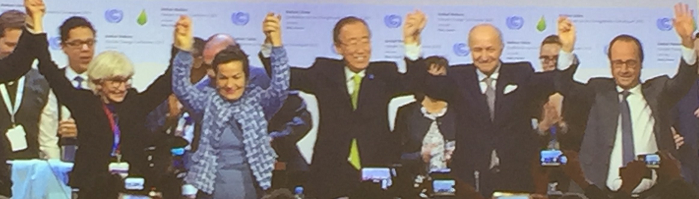
From 30 November to 12 December 2015, Parties to the UNFCCC met in Paris to negotiate a new global climate treaty.
The Paris Agreement was a remarkable outcome, especially after the failures of Copenhagen. Almost all involved, including Carbon Market Watch, seemed surprised at how positive the outcome was. However, expectations had been carefully managed in the preceding years, so that aspirations of environmentalists to have a treaty that reflected the scientific reality by dividing up the remaining global carbon budget, had been downplayed into unreality.
Paris did not come up with a decision to mobilise trillions needed to put the world on a 1.5 C pathway. Developed countries will continue to take the lead in mobilizing climate finance. However, the financial provisions are weak, with most relevant points shoved into decisions.
Paris, 10 December. With less than 48 hours of negotiation time left, countries continue arguing about a new proposed carbon offsetting mechanism. Key concerns relate to doubts about the need for carbon offsets in the future, the inclusion of land use carbon offsets that are likely to open a new gigatonne loophole, and allowing developed …
Read more “Rich countries set to benefit from proposed carbon offsetting mechanism in Paris”
Scroll down for French and Spanish NAMAs state of play NAMA development has increased significantly in the past years, with 30% more NAMAs in development since December 2014. According to the NAMA Database by Ecofys,[i] which tracks NAMA development worldwide, up to October 2015 there were 162 NAMAs at different stages across 51 countries. NAMAs …
Read more “WATCH THIS! NGO Newsletter #13: NAMAs”