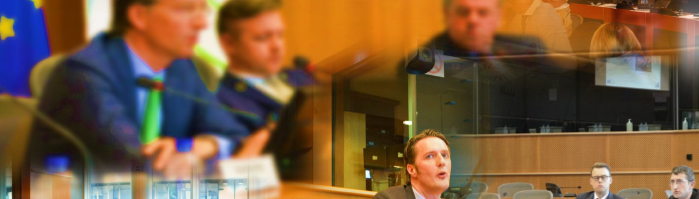
WATCH WEBSTREAMING HERE Wednesday 25th May 16:30 – 19:00 European Parliament – Room A5E2 With presentations from: Tomas Wyns, VUB “Decarbonising Europe’s Energy Intensive Industries: The Final Frontier” Donal O’Riain, Founder of Ecocem (watch the webstream for presentation) Martin Pei, Chief Technical Officer for SSAB “HYBRIT – A Swedish prefeasibility study project for hydrogen based …
Read more “European Parliament Event: Enhancing the EU’s industrial competitiveness through the EU ETS innovation fund”
The EU’s carbon market rules allow Central and Eastern European Member States to invest up to €12 billion in coal powered energy production. As representatives of the EU Member States are due to discuss the EU ETS this Wednesday, the new publication “Fossil fuel subsidies from Europe’s carbon market” adds momentum to the need to overhaul this policy.
Under the EU Emissions Trading System (EU ETS) the power sector no longer receives allowances for free but is required to purchase them from auctioning. An exception is made through the so called Article 10c of the EU ETS Directive. This provision allows lower-income Member States from Central and Eastern Europe to give allowances for free to electricity installations under the condition that they invest at least the equivalent monetary value of the free allowances in the modernisation and diversification of their energy systems.
The crisis facing the British steel industry has over the past week dominated front pages with the news that Tata Steel will sell all of its UK plants. Some have finger-pointed to the EU’s Emissions Trading System (EU ETS) as one of the reasons for the disarray in the steel industry, but analysis done for Carbon Market Watch and by others has shown that the steel sector in Europe has in fact benefited from EU’s climate policies.
This policy brief interprets the findings of a new study by CE Delft that shows how energy-intensive companies in Sweden have massively profited from their pollution to the count of €700 million because they are deemed to be at risk of “carbon leakage”. “Carbon leakage” refers to a hypothetical situation where companies transfer production to countries with weaker climate policies in order to lower their costs. Under the current EU Emissions Trading System (EU ETS) rules, industrial companies that are believed to be at risk of “carbon leakage” are awarded free pollution permits.
This policy brief interprets the findings of a new study by CE Delft that shows how energy-intensive companies in the Netherlands have massively profited from their pollution to the count of €1 billion because they are deemed to be at risk of “carbon leakage”. “Carbon leakage” refers to a hypothetical situation where companies transfer production to countries with weaker climate policies in order to lower their costs. Under the current EU Emissions Trading System (EU ETS) rules, industrial companies that are believed to be at risk of “carbon leakage” are awarded free pollution permits.
This policy brief interprets the findings of a new study by CE Delft that shows how energy-intensive companies in Germany have massively profited from their pollution to the count of €4.5 billion because they are deemed to be at risk of “carbon leakage”. “Carbon leakage” refers to a hypothetical situation where companies transfer production to countries with weaker climate policies in order to lower their costs. Under the current EU Emissions Trading System (EU ETS) rules, industrial companies that are believed to be at risk of “carbon leakage” are awarded free pollution permits.
This policy brief interprets the findings of a new study by CE Delft that shows how energy-intensive companies in France have massively profited from their pollution to the count of €2.7 billion because they are deemed to be at risk of “carbon leakage”. “Carbon leakage” refers to a hypothetical situation where companies transfer production to countries with weaker climate policies in order to lower their costs. Under the current EU Emissions Trading System (EU ETS) rules, industrial companies that are believed to be at risk of “carbon leakage” are awarded free pollution permits.
This policy brief interprets the findings of a new study by CE Delft that shows how energy-intensive companies in the UK have massively profited from their pollution to the count of €3.1 billion because they are deemed to be at risk of “carbon leakage”. “Carbon leakage” refers to a hypothetical situation where companies transfer production to countries with weaker climate policies in order to lower their costs. Under the current EU Emissions Trading System (EU ETS) rules, industrial companies that are believed to be at risk of “carbon leakage” are awarded free pollution permits.