Brussels, 15 March 2016: New analysis shows how industry across Europe has earned a €24 billion windfall from 2008 to 2014, under the EU Emissions Trading Scheme (EU ETS). This is the main policy used across the EU to “cost-effectively”[i] reduce CO2 emissions across industry. The findings in a report ‘Calculation of additional profits of sectors and firms from the EU ETS’, from independent environmental analysts CE Delft, adds momentum to calls from MEPs and campaigners for an overhaul of the policy ahead of the negotiations to revisit the ETS rules this year at EU level.
While European policymakers are debating how the EU’s Emissions Trading System (EU ETS) should be revised in the wake of the Paris agreement, the fall in the carbon price to below €6 per tonne of pollution gives a stark warning that Europe’s (supposedly) main climate instrument is not yet up to the job. Without the removal of surplus pollution permits, the adoption of a steeper decarbonisation pathway and the smart use of auctioning revenues, Europe’s carbon market will be doomed to fail.
In January, negotiations between the EU and Switzerland to link their carbon markets were concluded after 5 years of talks. Since the linking agreement has not (yet) been made publicly available, the consequences for Europe’s climate ambition remain unclear, including how it may impact the domestic nature of the EU’s 2030 climate target.
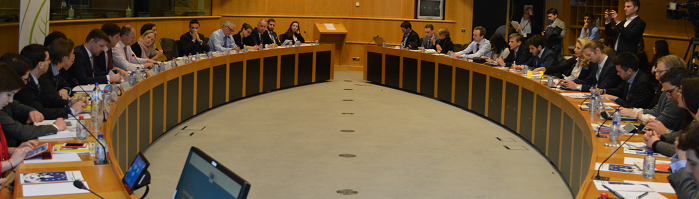
Tuesday 15th March, 15:00 – 17:00 European Parliament – Room 5G1 With presentations from: PETER ZAPFEL, DG CLIMA, European Commission “Innovation and carbon leakage in the EU ETS reform proposal” TOMAS WYNS, Vrije Universiteit Brussel “Post 2020 industrial and innovation policy” FEMKE DE JONG, Carbon Market Watch “Carbon leakage” and industry ambition in a post-Paris world …
Read more “European Parliament Event: RE-PLUMBING THE EU ETS: low-carbon innovation and carbon leakage in a post-Paris world”
Article submitted by Carbon Market Watch and published in issue #6 of ECO – the COP 21 NGO daily Newsletter ECO understands that several Parties are trying to get the high score for the new video game CAPMAN–our cute climate superhero fighting against Hot Air villains. Today’s winners are five EU countries (Denmark, Germany, the …
Read more “Game Over For Hot Air?”
Paris is hosting the 21st climate summit and the hopes are high that the conference will produce a new climate treaty to help keep global warming to below dangerous levels. The measure of success of the Paris climate treaty hinges on its ability to promote new climate actions while containing the dangers that hot air …
Read more “Beware hot air in the Paris climate talks”
A key consideration for the Paris treaty is how to incentivize real additional climate action while avoiding the laundering of bogus hot air credits. Under the Kyoto Protocol the lack of environmental integrity in market mechanisms has resulted in an 11 gigatonne hot air loophole. These hot air units are called AAUs which will not pose a problem for the Paris climate treaty since they cannot be used after 2020. However, the fate of the hot air units of existing domestic emissions trading systems still hangs in the balance.
24 November, 2015 3-4.30pm CET (Brussels) Description: Despite the domestic mitigation targets expressed by most developed countries in their INDCs, some countries, such as the EU, have expressed interest in using carbon markets under the Paris agreement. This event will discuss the potential role of carbon markets post-2020 and will focus on the impact of …
Read more “Webinar – Role of carbon markets under the Paris climate treaty and impact on EU’s climate policies”
The current EU ETS rules have granted preferential treatment to industrial companies deemed at risk of “carbon leakage” in the form of awarding free pollution permits. The ongoing legislative process to revise the EU ETS rules for the post-2020 period provides an important opportunity to revisit the rules under which industrial sectors may be deemed at risk of carbon leakage.