This beginner’s guide to the EU ETS aims to build knowledge and understanding of Europe’s carbon market for civil society organisations who have little or no prior experience with EU climate policies, especially in countries in the EU neighbourhood. It provides introductory knowledge on how the EU ETS is designed and how it functions. Increased …
Read more “EU ETS 101: A beginner’s guide to the EU’s Emissions Trading System (2024 update)”
23 January 2024 | 14:30 – 16:00 CET | ONLINE The EU’s Emissions Trading System (EU ETS) badly needs cleaning up. It needs to make heavy emitters pay a fair price for their immense carbon footprints and use that revenue to finance industrial decarbonisation and schemes that benefit society and the environment. Drawing on the …
Read more “Common good v private profit: Making the EU’s Emissions Trading System work for the many rather than the few”
The EU’s Emissions Trading System (EU ETS) covers aviation. But what does that mean for the climate and airlines?
The Free Allocation Regulation (FAR) revision is a necessary step to ensure the last years of the free allocation system are coherent with the aim of a full phase-out by 2030 (or 2034 for CBAM sectors) and provide the investment signals necessary to funnel funding into industrial decarbonisation.
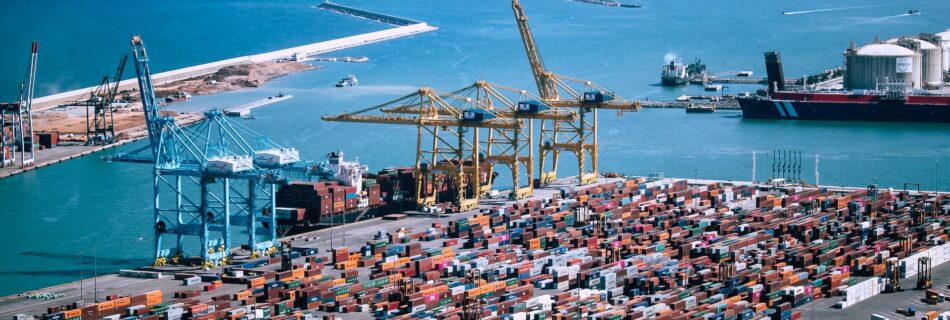
The EU’s Emissions Trading System (EU ETS) is being expanded to cover shipping. But what does this involve and what does it mean for the maritime sector?
Steelmaking represents the most polluting industrial sector in the EU. Delaying the transition to net-zero steelmaking in anticipation of a fully effective carbon pricing mechanism will prove too late.
Le présent rapport examine un éventail d’approches, qu’elles soient réglementaires — incluant des systèmes d’échange de quotas d’émission, des incitations fiscales et des subventions publiques directes — ou volontaires. En s’appuyant sur leurs limites, ainsi que sur des concepts prometteurs et des leçons tirées des cadres étudiés, il esquisse les grandes lignes d’une politique de CDR raisonnable.
This paper reviews a variety of regulatory approaches to carbon dioxide removals (including emissions trading systems, tax incentives and public direct subsidies) and voluntary approaches, and, building upon failures, promising concepts and lessons learned from the reviewed frameworks, sketches a blueprint for sensible CDR policy design.
Emissions Aristocracy of just 30 companies spews out half of the greenhouse gases covered by the European Union’s Emissions Trading System (EU ETS), representing a quarter of the EU’s carbon footprint, a CMW report uncovers.