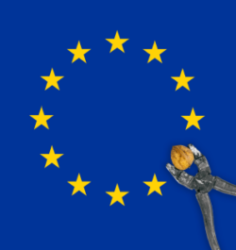
Executive summary With total greenhouse gas emissions of 708 million tonnes per year, the resource and energy-intensive industry is the third-largest climate polluter in Europe. The cement, chemical, and steel sectors alone are responsible for almost 60% of these emissions. Industrial emissions are regulated under the EU Emission Trading System (ETS), but the numerous exemptions …
Read more “Cracking Europe’s hardest climate nut – How to kick-start the zero-carbon transition of energy-intensive industries?”
Dear Vice-President Šefčovič, Commissioner Bulc, Commissioner Arias Cañete EU aviation emissions increased 96% from 1990 to 2016, and are now 3.6% of EU emissions. These emissions are included in the EU 2030 target, and ambitious action is required to ensure the target is achieved. ICAO’s Carbon Offsetting and Reduction Scheme (CORSIA) for International Aviation is …
Read more “Letter: CORSIA & European climate ambition on aviation”
Editorial At the recent UN climate talks in Bonn, negotiations on future market provisions largely focused on the process, but key issues will need to be sorted out at the next session in Bangkok before the “Paris rulebook” can be adopted. It is particularly important to have strong rules in place to protect the rights of those affected by climate …
Read more “Carbon Market Watch Newsletter – May 2018”
Last week, the European Commission published a list of 44 industries, representing 90% of total industry emissions, that will continue to receive their pollution permits for free under Europe’s carbon market rules after 2020. Over-generous hand-out of free pollution permits doesn’t incentivise emission cuts, and policymakers will need to find other ways to put industry …
Read more “Big polluters continue to get a free pass on Europe’s carbon market”
As usual, much attention on the recent EU budget proposal for 2021-2027 has focused on how the money will be spent. But where the funds come from and who will pay for Europe’s carbon-free transition is just as important. The European Commission rightly proposes that polluters also contribute to the future EU budget, but how …
Read more “Polluters should pay into the EU budget – but how?”
Europe’s energy-intensive industries need an urgent transformation in order to dramatically reduce their emissions in line with the Paris climate goals. This is far from the reality: EU industrial emissions rose by 2% in 2017 and projections show that they are not expected to decline up to 2030. One of the more challenging elements of …
Read more “Carbon Market Watch’s response to the public consultation on the EU ETS Innovation Fund”
Editorial Earlier this month, six EU countries discussed the possibility of introducing a minimum price on pollution. A carbon floor price in Northern and Western Europe could accelerate the shift away from coal and create a tipping point for the phase-out of fossil fuels in other sectors and jurisdictions. An initiative by the Dutch environmental organisation WISE aims to …
Read more “Carbon Market Watch Newsletter – March 2018”
Carbonkiller is an initiative by the Dutch environmental organisation WISE that allows anyone to buy and destroy emission permits from the massively oversupplied European carbon market with the aim to raise the price and to increase public engagement in one of Europe’s key climate tools. The EU’s Emissions Trading System (EU ETS) is Europe’s key …
Read more “Carbonkiller buys out the bubble!”
EU has agreed on its carbon market rules for the 2021-2030 period, but carbon prices will remain below levels required to achieve the Paris climate goals. Meaningful and rising carbon floor prices either at the national or regional level would speed up pollution cuts by incentivising low carbon investments and making coal financially unattractive. This …
Read more “Floor prices are necessary to support weak EU carbon market”