EU environment ministers will discuss whether the proposed revisions of the EU’s carbon market are enough to bring the bloc’s flagship climate instrument in line with the Paris climate change agreement. Carbon Market Watch answers key questions to help ministers come up with an appropriate response.
To match the ambition of the Paris Agreement the revised ESD for the post-2020 period should:
– European Union policy – meant to curb pollution – currently gives away more in pollution payouts than for innovation support – Split in industry opinion adds momentum for urgent overhaul of crucial policy currently not “fit for purpose” Brussels 25 May 2016 – New analysis shows that energy intensive industries are able to reduce …
Read more “New report finds energy intensive industry can cut emissions by 80% without losing competitiveness”
The EU has a long-term climate objective of achieving economy-wide emission reductions of 80-95% by 2050 to avoid dangerous climate change. It is often argued that such deep emission reductions are technically impossible or that they would harm the economy and create unemployment.
In the spring of 2016, Carbon Market Watch therefore asked the Institute for European Studies to look at the feasibility of such emission cuts by 2050 in three of the most important manufacturing sectors in Europe: chemicals, steel and cement. The main findings of the report “The Final Frontier – Decarbonising Europe’s energy intensive industries” are summarised in this briefing.
In April the Court of Justice of the European Union ruled against a case by carbon-intensive industries that had sought additional free pollution permits from the EU’s Emissions Trading System (ETS). The Court’s declaration backfired on the companies, when it ruled that the allocation of free permits had in fact been too generous, giving the Commission 10 months to recalculate the amount of free permits for the period up to 2020.
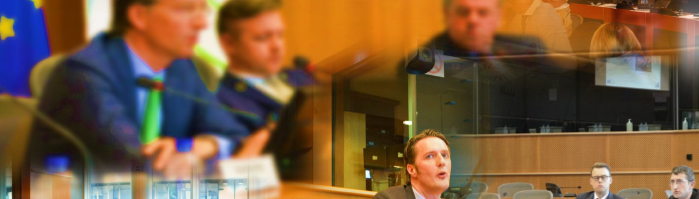
WATCH WEBSTREAMING HERE Wednesday 25th May 16:30 – 19:00 European Parliament – Room A5E2 With presentations from: Tomas Wyns, VUB “Decarbonising Europe’s Energy Intensive Industries: The Final Frontier” Donal O’Riain, Founder of Ecocem (watch the webstream for presentation) Martin Pei, Chief Technical Officer for SSAB “HYBRIT – A Swedish prefeasibility study project for hydrogen based …
Read more “European Parliament Event: Enhancing the EU’s industrial competitiveness through the EU ETS innovation fund”
The EU’s carbon market rules allow Central and Eastern European Member States to invest up to €12 billion in coal powered energy production. As representatives of the EU Member States are due to discuss the EU ETS this Wednesday, the new publication “Fossil fuel subsidies from Europe’s carbon market” adds momentum to the need to overhaul this policy.
A global climate deal was adopted last December in Paris, in which all countries agreed to take action on climate change. The Paris agreement is unique as it represents a historically significant milestone that aims to pursue efforts to limit global temperature rises to 1.5°C above pre-industrial levels.
The polluter-pays principle is supposed to promote less polluting habits, including greenhouse gas emission reductions. However, carbon pricing cannot deliver its intended results by itself. To fully exploit its potential to speed up the decarbonisation of Europe, carbon pricing must be framed in an overall supportive policy context.