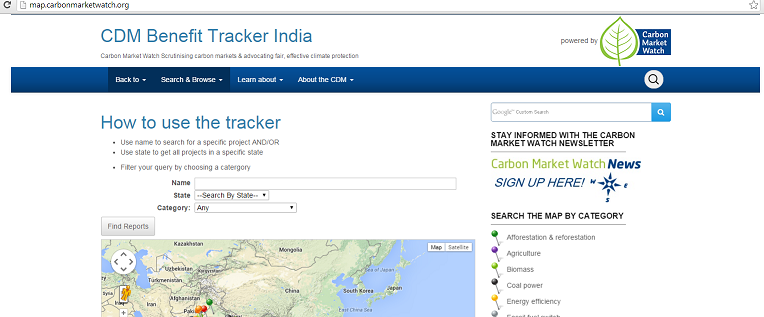
In Lima, Carbon Market Watch together with local Indian launched the ‘CDM Benefit Tracker India’, an interactive map that compares the sustainable development objectives outlined in CDM project application documents with eye witness accounts from local communities. Project owners have now been invited to comment on the results that find severe discrepancies between claims and local realities.
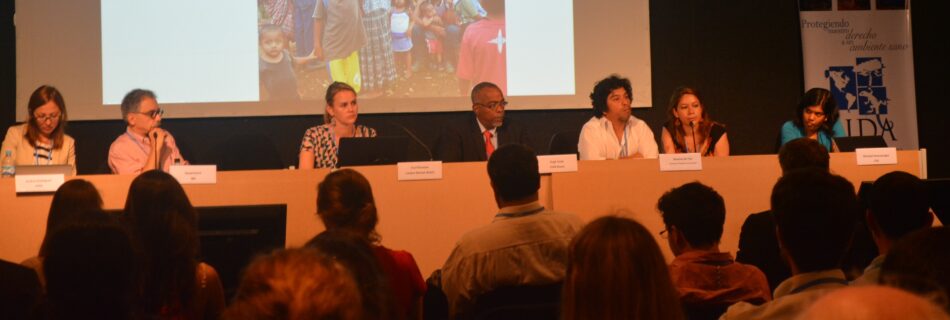
With a number of Clean Development Projects (CDM) in the forefront of climate discussions for failing to deliver clean and sustainable development to poor countries, representatives of civil society gathered to discuss the many implications of coal power projects. The event named ‘The Sasan Coal Power CDM Project Lessons Learnt for Climate Finance’ was held in the People’s summit in Peru to illustrate the repercussions of dirty energy and what happens in the absence of social safeguard systems and disregard for sustainable development benefits within the CDM projects.
As the climate negotiations kicked off in Lima, Carbon Market Watch along with Center for International Development Law (CIEL) and Interamerican Association for Environmental Defense (AIDA) organized a joint side event as a part of the COP20.
Brussels/Lima 8 December 2014, today the ‘CDM Benefit Tracker India’ will be launched in Lima, Peru. The Tracker compares eye witness accounts of local communities with sustainability objectives of CDM projects and finds severe discrepancies between claims and local realities. Local groups are now calling on countries in Lima to establish monitoring and verification provisions …
Read more “Press Advisory: Carbon Offsetting Benefit Tracker launched to showcase local reality of CDM projects”
Carbon Market Watch welcomes the opportunity to provide input on discussions on specific possible additional land use, land-use change and forestry activities and specific alternative approaches to addressing the risk of non-permanence under the Clean Development Mechanism (CDM).
The future role of the CDM in the 2015 climate treaty is likely to be very limited for a number of reasons. From 2020, also developing countries are expected to contribute to the global mitigation efforts. This has a big impact on the original purpose of the CDM for a number of reasons 1) developing countries will want to account for their own emission reductions 2) developed countries will have to have much higher climate mitigation targets 3) emission reductions in developing countries will have to be financed in addition to climate action in developed countries.
The future role of the Clean Development Mechanism (CDM) in the 2015 climate treaty is likely to be very limited. CDM advocates have therefore started to look beyond traditional funds for offsets and are now eyeing at climate finance. However, the CDM in its current state does not provide environmental and social standards needed for climate action.
Accounting of emissions will be a cornerstone of a future climate treaty and is hugely important for the integrity of carbon markets as well as keeping us on track to limit global warming below 2°C. Lima will need to lay grounds for a rigorous accounting framework and robust unit quality requirements. It will also need to establish consistency to the ICAO process that is developing a global market based mechanism for aviation emissions.
At the occasion of the international human rights day on 10 December 2014, the need to protect human rights in all climate actions will be high up on the agenda in Lima. The clock is ticking for delegates to put in place a robust institutional safeguards system for existing and new carbon markets to protect the people most vulnerable to climate change.