This policy brief interprets the findings of a new study by CE Delft that shows how energy-intensive companies in the Netherlands have massively profited from their pollution to the count of €1 billion because they are deemed to be at risk of “carbon leakage”. “Carbon leakage” refers to a hypothetical situation where companies transfer production to countries with weaker climate policies in order to lower their costs. Under the current EU Emissions Trading System (EU ETS) rules, industrial companies that are believed to be at risk of “carbon leakage” are awarded free pollution permits.
This policy brief interprets the findings of a new study by CE Delft that shows how energy-intensive companies in Germany have massively profited from their pollution to the count of €4.5 billion because they are deemed to be at risk of “carbon leakage”. “Carbon leakage” refers to a hypothetical situation where companies transfer production to countries with weaker climate policies in order to lower their costs. Under the current EU Emissions Trading System (EU ETS) rules, industrial companies that are believed to be at risk of “carbon leakage” are awarded free pollution permits.
This policy brief interprets the findings of a new study by CE Delft that shows how energy-intensive companies in France have massively profited from their pollution to the count of €2.7 billion because they are deemed to be at risk of “carbon leakage”. “Carbon leakage” refers to a hypothetical situation where companies transfer production to countries with weaker climate policies in order to lower their costs. Under the current EU Emissions Trading System (EU ETS) rules, industrial companies that are believed to be at risk of “carbon leakage” are awarded free pollution permits.
This policy brief interprets the findings of a new study by CE Delft that shows how energy-intensive companies in the UK have massively profited from their pollution to the count of €3.1 billion because they are deemed to be at risk of “carbon leakage”. “Carbon leakage” refers to a hypothetical situation where companies transfer production to countries with weaker climate policies in order to lower their costs. Under the current EU Emissions Trading System (EU ETS) rules, industrial companies that are believed to be at risk of “carbon leakage” are awarded free pollution permits.
Brussels, 15 March 2016: New analysis shows how industry across Europe has earned a €24 billion windfall from 2008 to 2014, under the EU Emissions Trading Scheme (EU ETS). This is the main policy used across the EU to “cost-effectively”[i] reduce CO2 emissions across industry. The findings in a report ‘Calculation of additional profits of sectors and firms from the EU ETS’, from independent environmental analysts CE Delft, adds momentum to calls from MEPs and campaigners for an overhaul of the policy ahead of the negotiations to revisit the ETS rules this year at EU level.
The European Commission is expected to publish legislation on how to include the land use, land use change and forestry (LULUCF) sector into the EU’s 2030 climate framework in the summer of 2016. Three options presented by the Commission on how to do this suggest various levels of integration with other sectors, from keeping LULUCF in a separate pillar, combining the sector with methane (CH4) and nitrous oxide (N20) agriculture emissions, or adding the sector into the Effort Sharing Decision (ESD).
While European policymakers are debating how the EU’s Emissions Trading System (EU ETS) should be revised in the wake of the Paris agreement, the fall in the carbon price to below €6 per tonne of pollution gives a stark warning that Europe’s (supposedly) main climate instrument is not yet up to the job. Without the removal of surplus pollution permits, the adoption of a steeper decarbonisation pathway and the smart use of auctioning revenues, Europe’s carbon market will be doomed to fail.
In January, negotiations between the EU and Switzerland to link their carbon markets were concluded after 5 years of talks. Since the linking agreement has not (yet) been made publicly available, the consequences for Europe’s climate ambition remain unclear, including how it may impact the domestic nature of the EU’s 2030 climate target.
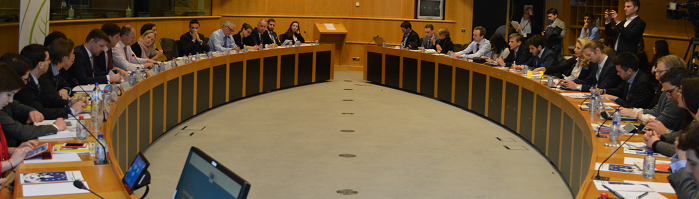
Tuesday 15th March, 15:00 – 17:00 European Parliament – Room 5G1 With presentations from: PETER ZAPFEL, DG CLIMA, European Commission “Innovation and carbon leakage in the EU ETS reform proposal” TOMAS WYNS, Vrije Universiteit Brussel “Post 2020 industrial and innovation policy” FEMKE DE JONG, Carbon Market Watch “Carbon leakage” and industry ambition in a post-Paris world …
Read more “European Parliament Event: RE-PLUMBING THE EU ETS: low-carbon innovation and carbon leakage in a post-Paris world”