South Korea plans to use 37.5 million international carbon credits, accounting for 13% of total emission reductions, to meet its 2030 Nationally Determined Contribution (NDC). According to ongoing government deliberations (Q4 2026), the credits in question would originate from problematic sources that are expected to amount to 45.43 million credits.
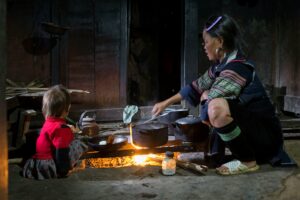
The largest portion comprises 34.92 million credits from Clean Development Mechanism (CDM) projects transitioning to the Paris Agreement Crediting Mechanism (PACM): in order of magnitude, gas pipeline leakage (14.02 million), cookstoves (12.41 million), and renewable energy (5.17 million), as well as other project types (3.32 million). The South Korean government also considers using 7.84 million legacy CDM credits, so called Certified Emission reductions (CERs), potentially issued in the period between 2013 and 2020 under the Kyoto Protocol, as well as an additional 2.67 million credits from government-led REDD+ projects in Cambodia, Myanmar, and Laos. We also observe developments that indicate possible VCM integration in future government and corporate climate plans.
The briefing warns this national climate strategy carries significant risks due to the quality of the credits. Credits from CDM transition projects bear risks stemming from outdated methodologies and documented over-crediting. Legacy CERs could be 15+ years old by the time they are used in 2030. The government-led REDD+ projects are also unlikely to deliver the benefits they claim. Moreover, Article 6 provisions lack adequate transparency, accountability and human rights safeguards. Reliance on international credits undermines domestic climate measures, which can be seen from problematic experiences from Switzerland, Japan, and the EU. There is also a big risk for developing country partners that could jeopardise their own climate targets by overselling credits.
We urge the South Korean government to prioritise domestic decarbonisation over importing international credits. Legacy CDM credits must especially be excluded and VCM credits should not be streamlined into the South Korean climate framework. South Korea should showcase climate leadership through domestic action instead of relying on questionable offsetting to reach their climate targets on paper.