
Verified but not trusted: Do audits ensure carbon credit quality?

Carbon credits that have been verified by a third party have long been presented as inhabiting a guarantee of quality: if a project has been third-party audited, its credits must represent genuine climate action. But our new report ‘Verified but not trusted: do audits ensure carbon credit quality?’ tunes in on the voices of academia and critics and reveals a very different reality. 

Behind the audit seal lies a system of conformity over impact. Auditors are only instructed to check whether a project complies with a standard’s rulebooks, regardless of the lack of scientific rigour or robustness of these rules. Worse still, the prevailing ‘select and pay’ model lets project developers choose and pay the very auditors that are tasked with scrutinising their work. This inherent conflict of interest effectively rigs the auditing process. As a consequence, auditors are neither equipped nor incentivised to go beyond a tick-boxing exercise. 

The way forward? We prepared actionable recommendations to reform this system: boost transparency through complete and reliable audit documentation, and stop treating third-party verification as a quality check. An auditors rubber stamp is not proof of good project performance. And it definitely is not a shield against greenwashing. 

Read the full report and our recommendations to buyers, policymakers, standards, auditors and the ICVCM. 

CMW_VVB_Report_Final

Annexes

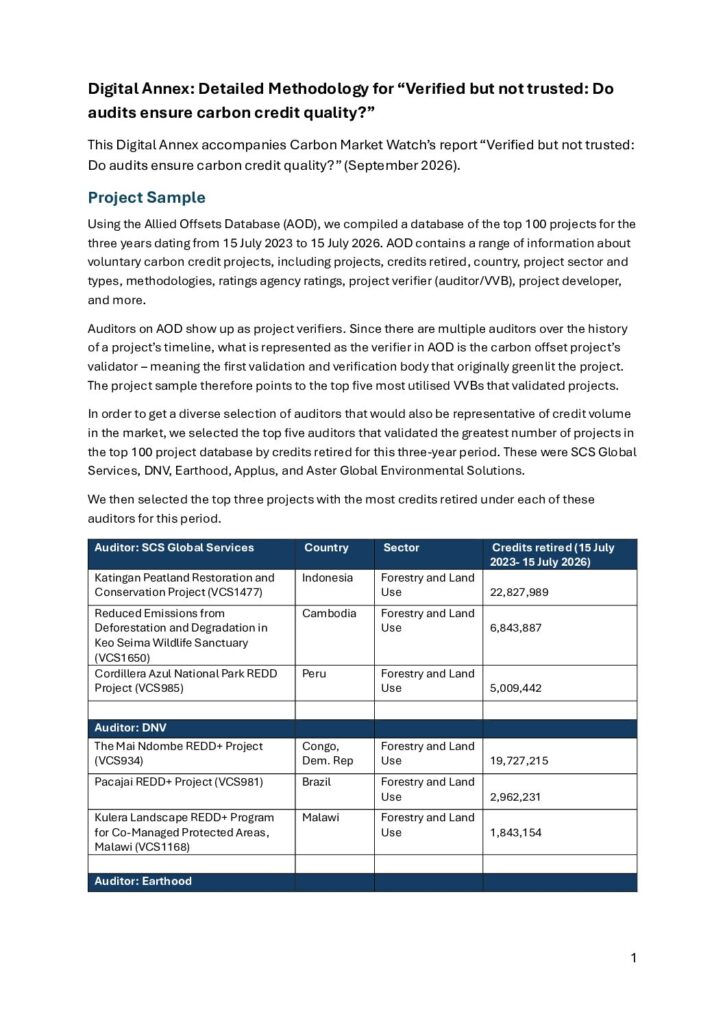
Methodology

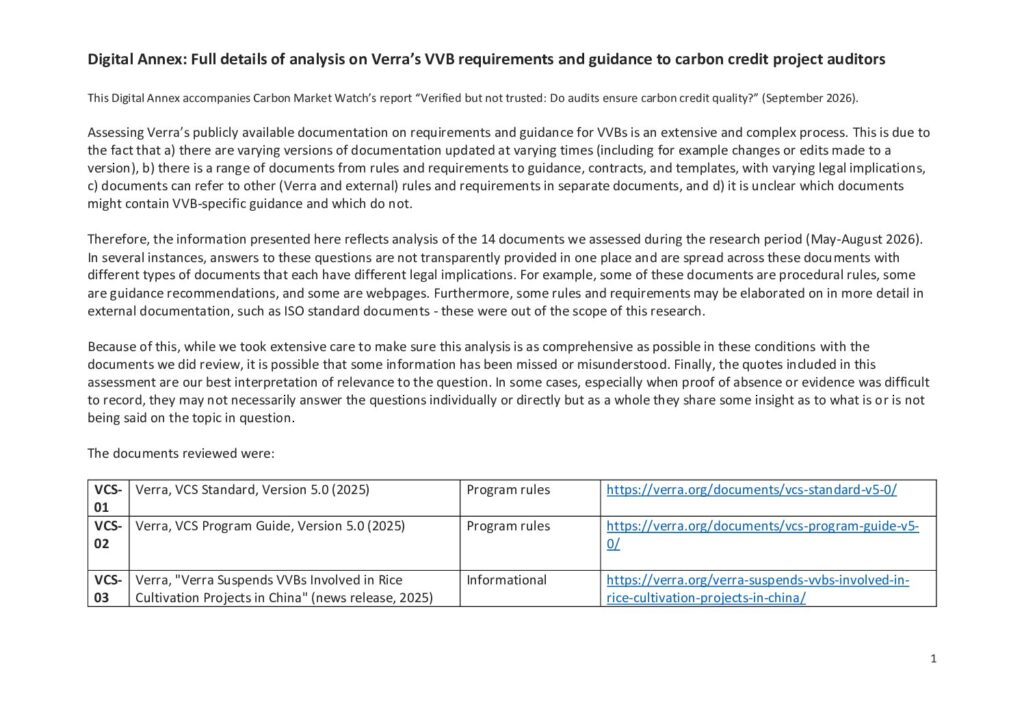
VVB requirements

DIGITAL ANNEX- Verified but not trusted- Full Methodology
DIGITAL ANNEX- Verified but not trusted- Full VVB requirements analysis

Related publications

Scroll to top

Join our mailing list

Stay in touch and receive our monthly newsletter, campaign updates, event invites and more.