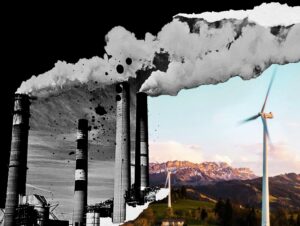

Civil society must be included in EU policymaking
Carbon Market Watch and 550 civil society organisations from 40 countries are today joining forces to fight back against ongoing attacks against NGOs from centre-right and far-right political voices.

Carbon Market Watch and 550 civil society organisations from 40 countries are today joining forces to fight back against ongoing attacks against NGOs from centre-right and far-right political voices.

Signatories believe that to better prepare member states for the implementation of ETS2, early access must be granted to revenue before the system begins in 2027.

The European Commission’s Clean Industrial Deal and Omnibus package supports big polluters while the EU’s climate goals are missing in action

Heavy industries covered by the EU Emissions Trading System (ETS) received most of their pollution permits for free, effectively subsidising Europe’s dirtiest businesses, a new report by Carbon Market Watch and WWF reveals. This wasteful and inefficient policy cost society €40 billion.

In its freshly published report on scaling up carbon dioxide removals in the EU, the European Scientific Advisory Board on Climate Change (ESABCC), established by the EU Climate Law, makes setting separate climate targets its number one recommendation. This aligns with what Carbon Market

No airline has yet been obliged to use a single carbon credit under the UN’s Carbon Offsetting and Reduction Scheme for International Aviation (CORSIA). And when they will, CMW research reveals the European Union’s Emissions Trading System (EU ETS) imposes a carbon price on

At the COP29 climate conference in Baku, negotiators need to fix Article 6 carbon markets but, most importantly, they need to fix the world’s failure to slash emissions.

Fresh evidence published by the Science Based Targets initiative (SBTi) confirms the unsuitability of carbon offsetting to meet emissions targets, echoing the findings of a new Carbon Market Watch study that casts doubt over the fairness of financial flows in the voluntary carbon market

The net-zero strategy of Occidental Petroleum (Oxy) relies heavily on unproven carbon removal technologies to camouflage its fossil fuel emissions and those of its customers while expanding its oil and gas production, a new investigation reveals.
We use cookies to improve your experience on our site. By using our site, you consent to cookies. You can configure your cookie setting.
Manage your cookie preferences below:
Essential cookies enable basic functions and are necessary for the proper function of the website.
Statistics cookies collect information anonymously. This information helps us understand how visitors use our website.
Google Analytics is a powerful tool that tracks and analyzes website traffic for informed marketing decisions.
Service URL: policies.google.com (opens in a new window)
Stay in touch and receive our monthly newsletter, campaign updates, event invites and more.