
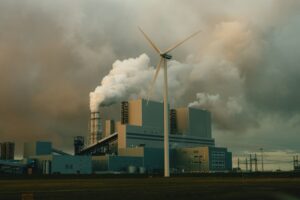
How not to mess with the ETS
Carbon Market Watch’s 10-point plan to keep the EU Emissions Trading System on track to serve the climate and society.

Carbon Market Watch’s 10-point plan to keep the EU Emissions Trading System on track to serve the climate and society.

A tool that aims to promote and safeguard sustainable development under the UN carbon market offers indigenous peoples and local communities little protection against projects which infringe on their land or violate their human rights. This was the disturbing finding of a joint investigation

Oil and gas interests pollute the carbon crediting rulebook and invest heavily in a marketplace flush with low-quality carbon credits. A new Carbon Market Watch report demonstrates how some of the world’s biggest fossil fuel companies use their oversized leverage to influence major decision-making

Oil and gas interests pollute the carbon crediting rulebook and invest heavily in a marketplace flush with low-quality carbon credits. A new Carbon Market Watch report demonstrates how some of the world’s biggest fossil fuel companies use their oversized leverage to influence major decision-making

Allowing coal-fired power plants to generate carbon credits as a way of financing their early retirement sounds better in theory than it would work in practice if the proposed methodology from Verra were to be implemented. Verra must go back to the drawing board

A review of existing studies finds that there is insufficient evidence to support the hypothesis that corporate investments in the voluntary carbon market increase a company’s climate ambition.

Carbon markets continued to feature prominently and often worryingly at COP30. Carbon Market Watch witnessed a stark contrast between the optimism championed by the many initiatives promoting “high quality” carbon markets and the negotiation rooms where concerted efforts were made to water down Article

The International Maritime Organisation’s stalled Net-Zero Framework has the potential to shave a mere tenth off the carbon footprint of shipping by 2030, which is only a drop in the ocean of what the Paris Agreement requires, our latest study finds. Given the recent

By confronting the aviation industry’s full climate impact, our research shows that by applying the polluter-pays principle and expanding carbon pricing to non-covered aviation climate impacts, there could be a tenfold increase in EU ETS revenues between 2025 and 2040 from the aviation sector.
We use cookies to improve your experience on our site. By using our site, you consent to cookies. You can configure your cookie setting.
Manage your cookie preferences below:
Essential cookies enable basic functions and are necessary for the proper function of the website.
Statistics cookies collect information anonymously. This information helps us understand how visitors use our website.
Google Analytics is a powerful tool that tracks and analyzes website traffic for informed marketing decisions.
Service URL: policies.google.com (opens in a new window)
Stay in touch and receive our monthly newsletter, campaign updates, event invites and more.