Carbon Market Watch embarks on an industrious away day
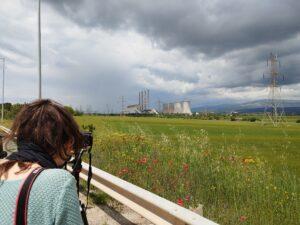
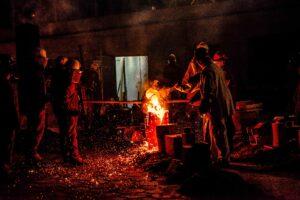
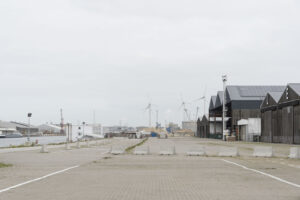
To savour the real-world implications of our climate work, the Carbon Market Watch team visited an industrial zone seeking to decarbonise and a sustainable co-housing project.

To savour the real-world implications of our climate work, the Carbon Market Watch team visited an industrial zone seeking to decarbonise and a sustainable co-housing project.

With its focus on tonnes of carbon dioxide discharged into the atmosphere, the EU’s Emissions Trading System can appear to be technical and immaterial to most people. To uncover the human dimension of the EU ETS, with its challenges and opportunities, Carbon Market Watch

Following the revamping of the EU’s Emissions Trading System, the associated Innovation Fund also requires an overhaul to ensure it serves the purpose of accelerating decarbonisation. Here are Carbon Market Watch’s and Sandbag’s recommendations.

The failure of the European Parliament’s environment committee (ENVI) to demand limits on the amount of greenhouse gases industrial installations are allowed to emit undermines its proposal that the Industrial Emissions Directive should help achieve decarbonisation.

The steel industry’s strategic importance coupled with its strong lobbying power have combined to shield it from a tightening of the Emissions Trading System. This is harmful to the climate, unfair to taxpayers and hurts the sector’s long-term competitiveness.

The EU must ignore lobbying efforts from industry to certify the storage of carbon dioxide in cement or concrete as carbon removals.

EU environment ministers will soon hammer out their position on the revision of one of the largest and most impactful environmental policies in Europe, the Industrial Emissions Directive. One crucial element seems to have been left out yet again: the regulation of greenhouse gas

The debate on EU industrial subsidies in the face of the US Inflation Reduction Act and against the backdrop of the Emissions Trading System (EU ETS) and Carbon Border Adjustment Mechanism (CBAM) deals raises some uncomfortable questions.

The long process that was meant to transform the EU’s Emissions Trading System into an effective tool for climate action has culminated in a final deal that will not reduce Europe’s industrial carbon footprint rapidly enough to tackle the climate crisis. The reformed EU
We use cookies to improve your experience on our site. By using our site, you consent to cookies. You can configure your cookie setting.
Manage your cookie preferences below:
Essential cookies enable basic functions and are necessary for the proper function of the website.
Statistics cookies collect information anonymously. This information helps us understand how visitors use our website.
Google Analytics is a powerful tool that tracks and analyzes website traffic for informed marketing decisions.
Service URL: policies.google.com (opens in a new window)
Stay in touch and receive our monthly newsletter, campaign updates, event invites and more.